
Off the
beaten path
Most visitors to Lake Schliersee walk once around the lake and take the cable car up the Schliersberg. Both are worth doing, and both are in every guide. These ten tips come from Ute and Markus Leitner, who run the Terofal in the village centre, and cover what their guests most often miss: the view from the chapel hill behind the hotel, a Tuesday night at Bavaria’s first peasant theatre, a sandbank by the island and their favourite alpine hut.
Ten tips in numbers
12theatre tickets held for our guests at every performance
986metres, Hohenwaldeck castle ruin
7minutes by cable car up the Wendelstein
11kilometres to Lake Tegernsee
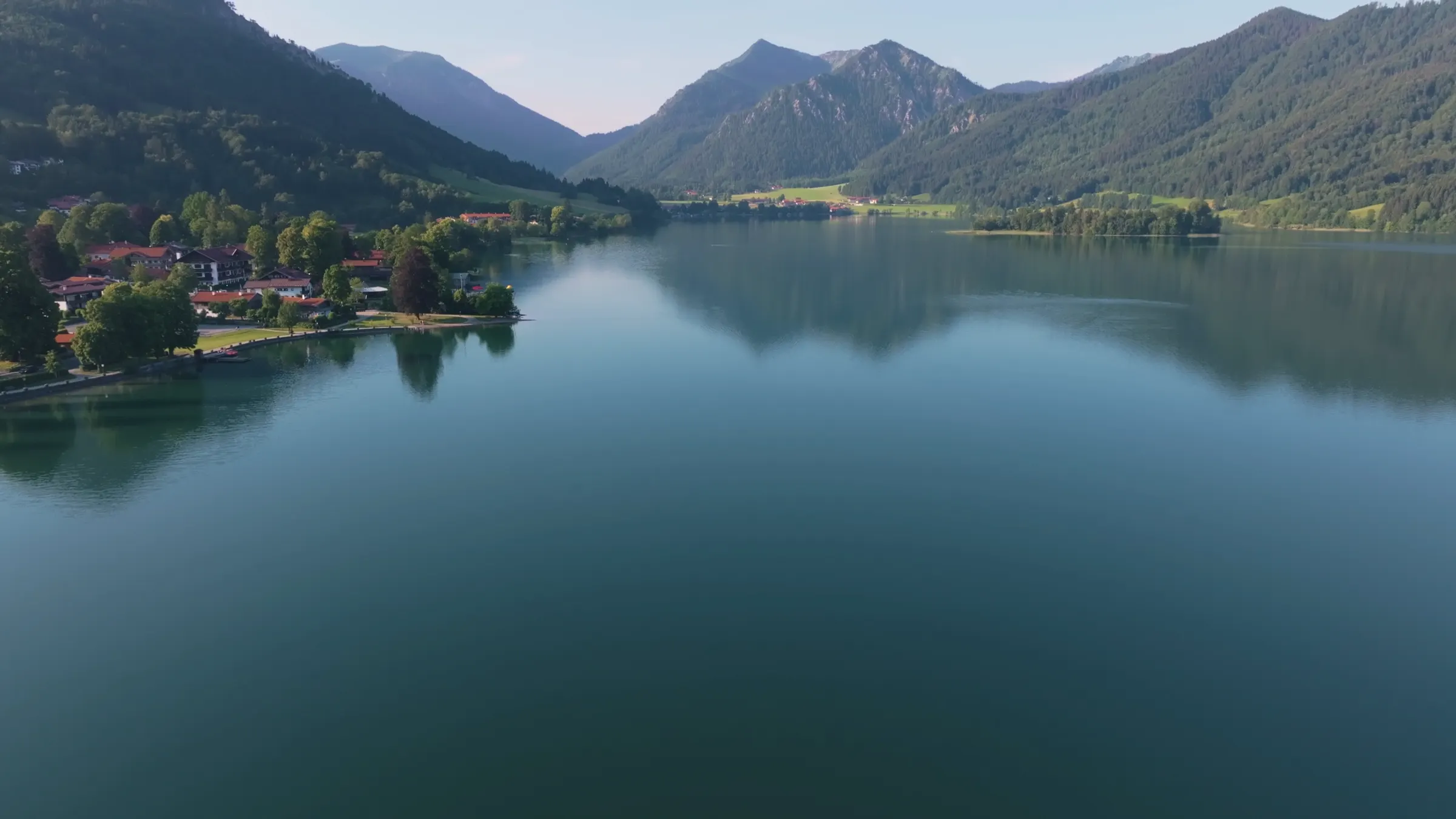
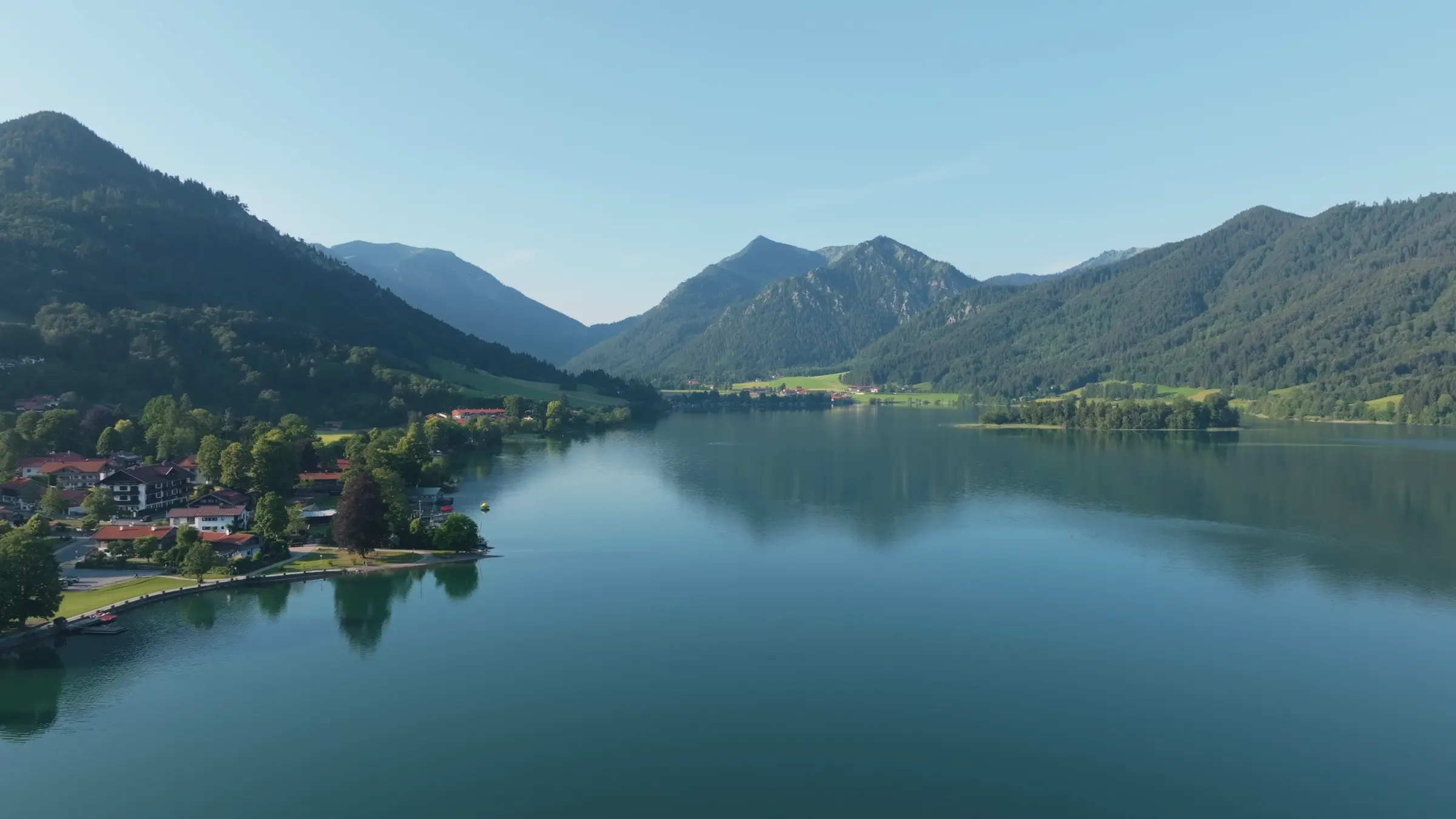
Schliersee is a municipality of about 6,700 people on a small lake 50 minutes south of Munich by train, at the foot of the Bavarian Alps. The lake is 7.4 kilometres around, private motorboats are banned, and the mountains start at the water. The standard list of things to do here is short: the lakeside walk, the Schliersberg cable car, a boat trip, the open-air museum. We cover all of those in other articles.
This page is different. It collects what, in the experience of Ute and Markus Leitner, guests most often leave out even though it is close, cheap and usually what they remember. Each tip says why it is worth it, how to get there, when it works, how long it takes and one detail you should know beforehand. Anything that depends on the season or an operator is described as a rule of thumb and linked to the operator.
The Weinberg: a viewpoint in the middle of the village
A few minutes uphill from our front door. An old lime tree, a Gothic chapel and the whole lake below.
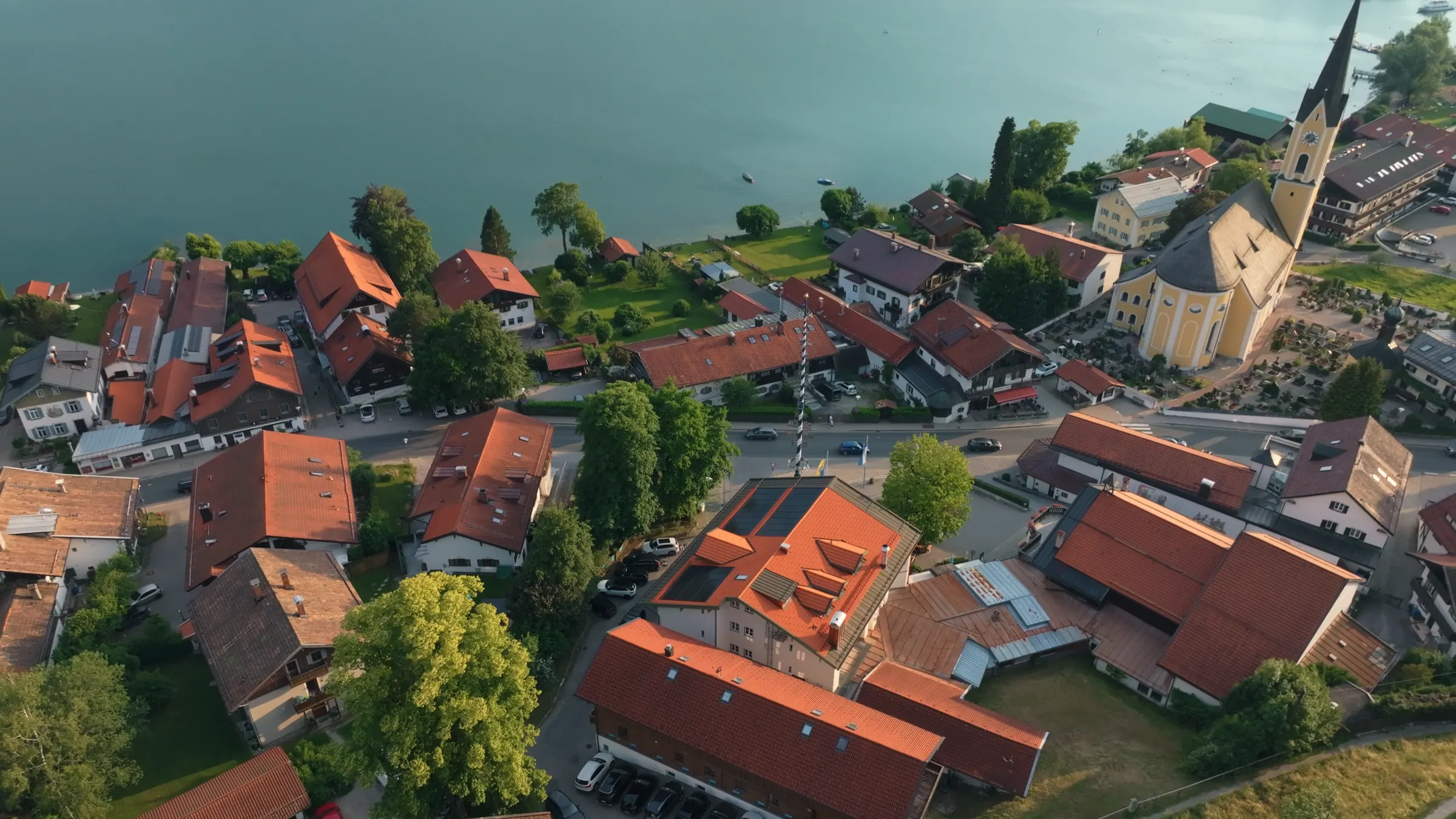
Ask Ute and Markus Leitner for one tip and this is it: the Weinberg, the small hill directly behind the hotel. Despite the name, which means vineyard, it is a low knoll in the middle of the village, which is exactly why people walk past it. From the windows of our Eco and Standard rooms you can see what stands on top: the chapel of St George.
A footpath signed “Zum Weinberg” leads up. At the top there is an old lime tree with a verse by the Bavarian poet Karl Stieler, and next to it the chapel, whose foundations are dated to between 1368 and 1387; the baroque high altar is from 1624. From here you look across the roofs to the parish church of St Sixtus, the lake with Wörth island and the mountains to the south.
Half an hour is enough there and back. For a little more, go down the far side and return along Hans-Miederer-Straße past the Radspielerhaus, a craftsman’s house dating back to 1474, to the square in front of the hotel. That loop is about two kilometres with 50 metres of climbing, according to Bergwelten.
Early morning in autumn, with mist on the lake, is the best moment, or an evening stroll after dinner. In October the Weinberg chapel is also one of the venues of the Kulturherbst festival; in 2026 Johannes Wegmann gives a reading there on 27 October about the hill and the Wittelsbach royal family.
Hohenwaldeck castle ruin: open again since 2024
The hosts’ favourite easy walk, 2 to 3 hours from the front door.
The easy walk Ute and Markus Leitner recommend most often starts outside the hotel: along the lake to the hamlet of Fischhausen, up to the ruin of Hohenwaldeck castle and back over the Oberleiten meadows. Allow 2 to 3 hours. They prefer it to every other short walk because of the view over the whole of the lake from above.
The castle stands at 986 metres on a rocky spur on the west side of the Leitnerberg, a good 200 metres above the water. It was built in the late 13th century. Its last knightly resident was probably Georg von Waldeck, who died in 1380; around 1500 a rockfall made it uninhabitable for good, and by 1568 the cartographer Philipp Apian described only a ruin with trees growing inside it.
Why so few visitors know it: from summer 2020 the ruin was closed because the masonry was crumbling. It was restored between 2023 and autumn 2024 and reopened on 28 October 2024. A wooden walkway now leads past the remains of the tower into the interior.
The Waldeck name turns up again on the lake. Legend has it that one of the knights left his unfaithful wife to starve on Wörth island. The walk works all year unless there is ice on the path. In the woods, roots and stones are slippery when wet, so wear proper shoes rather than trainers.
Swimming at Wörth island: the sandbank in the lake
The hosts’ swimming tip for hotel guests. With a hired boat, and with the rules that come with it.
The private bathing spot at our Seeheimat holiday flats is reserved for people staying there. For hotel guests Ute and Markus Leitner suggest two ways into the water: the Strandbad, the public lido in Schliersee, or, their real tip, hiring a rowing boat, pedalo or electric boat and swimming at the sandbank by Wörth island, where the lake turns shallow in the middle of the water.
The shallows have a geological reason. The island is the tip of a ridge that runs across the lake and divides it into two basins, and around it the rock comes up to just below the surface. In a rowing boat you can sometimes feel it with the oars.
At the Schliersee Schifffahrt boat hire, the current price list gives €12 an hour for a rowing boat and €16 for a pedalo, each for up to four people; electric boats cost €26 to €36 an hour depending on the motor. Book two hours rather than one, so there is time in the water.
Before you jump in, read the rules, because each hire company sets its own and they are strict. At the Schliersee Schifffahrt, electric boats must keep 100 metres from the shore and the island, may only moor at the company’s own jetty, the terms state that swimming from the boat is not allowed, and running aground costs at least €120. Ask when you hire which boat you may swim from and where. July and August are the months to go, when the lake reaches up to 23 °C according to the municipality.
A night at the Schliersee peasant theatre
Bavaria’s first peasant theatre plays right next to the hotel. We hold 12 tickets for every performance.
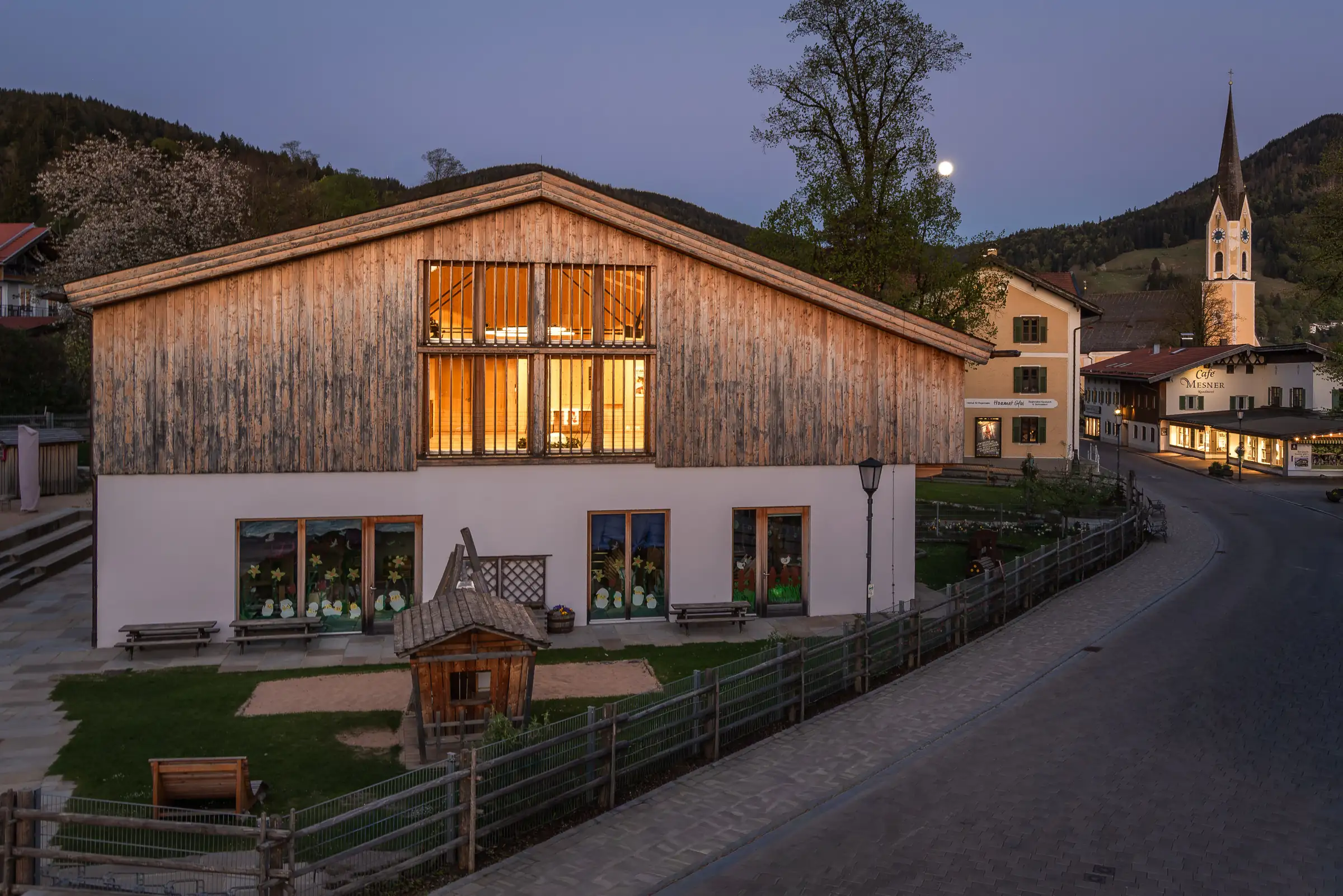
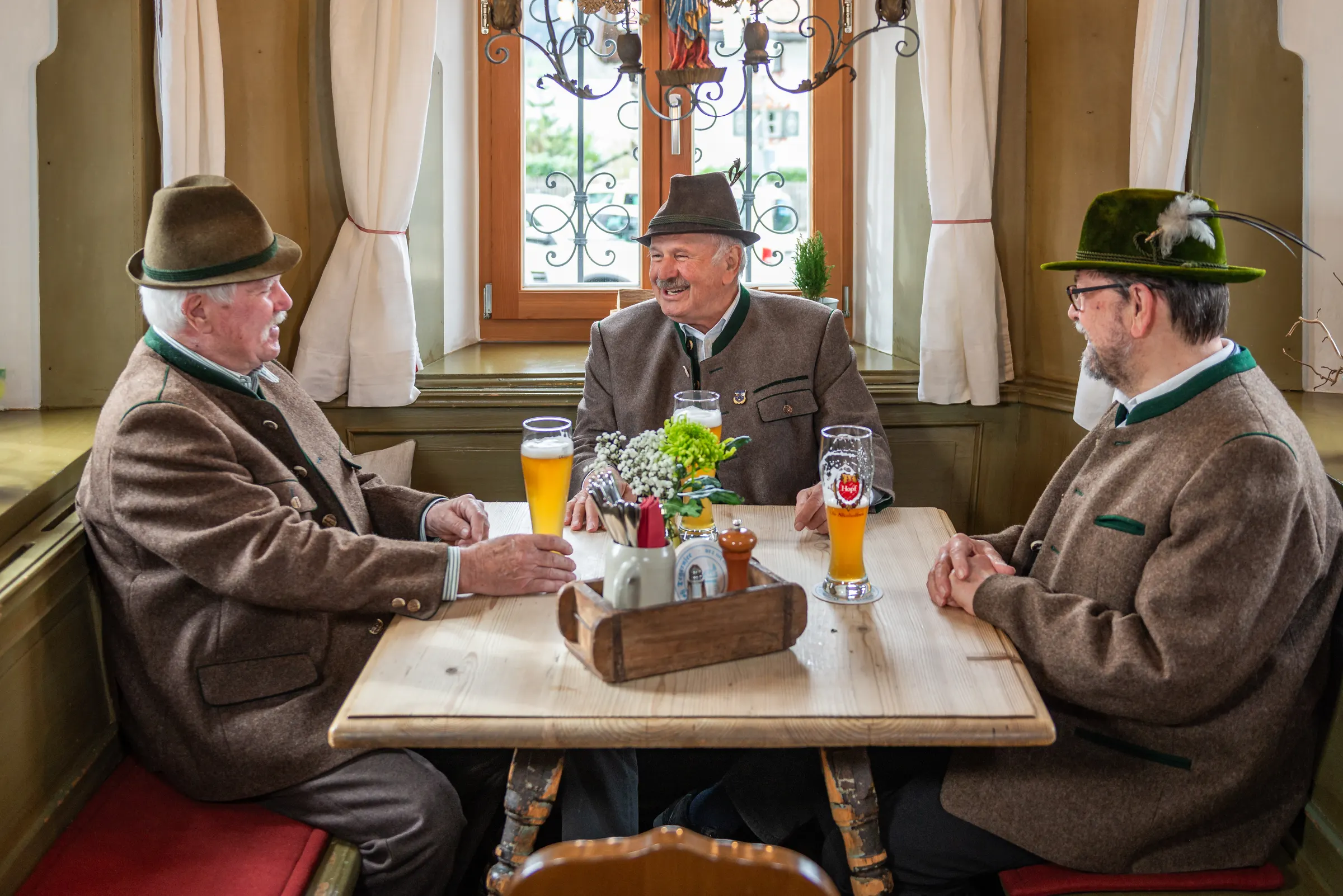
Xaver Terofal, after whom the square in front of the hotel is named, founded the Schlierseer Bauerntheater with Konrad Dreher in 1892. It was the first Bauerntheater in Bavaria: folk theatre in dialect, originally played by local craftsmen and farmers rather than trained actors. The hall next door was built the same year to plans by Emanuel von Seidl, and in 1895 the company toured America and played the Metropolitan Opera in New York. Many guests do not realise it still has a regular season.
Today the Schlierseer Bauerntheater association stages Bavarian folk plays. The 2026 season runs from Easter Monday to early December with around 20 performances, usually on Tuesdays at 8 pm. The plays are performed in Bavarian dialect.
The detail you will not find elsewhere: for every performance we hold 12 tickets in the top category for our hotel guests. You reserve and pay for them at our reception, and they cannot be returned. Tickets cost €12, €15 or €18 depending on the category, one euro less with the guest card (the discount is not available online). During the show the bar is open, with drinks, pretzels and schnitzel rolls.
That makes a whole evening without getting in a car: dinner at the Xaver restaurant, then across the square to the theatre. If you are here on a Tuesday, ask at reception before you arrive, while there are still seats in our allocation.
The Kulturherbst: a month of stages every October
Concerts, cabaret and readings in churches, a museum and the theatre, for almost 20 years.
Every October Schliersee holds its Kulturherbst, its autumn culture festival, run by the local tourism association and the visitor information office. The real reason to go is the venues: the 1892 theatre, the parish church of St Sixtus with work by the rococo artist Johann Baptist Zimmermann, the chapel on the Weinberg, the Protestant Christuskirche by Olaf Andreas Gulbransson, the local history museum and the forum at the Vitalwelt. You get to see the village’s historic buildings from the inside, at night.
The 2026 programme runs from 8 to 31 October. Highlights include the cabaret artist Josef Hader with “Hader on Ice” on 26 October at the theatre, and Carl Orff’s Carmina Burana to close on 31 October at St Antonius in neighbouring Hausham. Most events are in German; the concerts work for everyone. An outdoor humour exhibition in the Kurpark stays up until 3 November.
Tickets are sold at the visitor information office in the Vitalwelt, Perfallstraße 4, four minutes’ walk from the station towards the lake, and online through München Ticket. If you go to five or more events, the festival pass takes about 20 per cent off every ticket from the fifth, provided you buy them all at once at the information office.
October is not the off season here. It is the month you see the village from the inside.
Lunch at an alpine hut: the Freudenreichalm
The hosts’ favourite Alm, below the Brecherspitz at around 1,260 metres.
An Alm is a summer pasture in the mountains with a hut on it. Cattle graze there from early summer, and some huts are bewirtschaftet, which means they serve food: a Brotzeit (a cold plate of bread, cheese and sausage), cake and drinks. Of all the huts around the lake, the Freudenreichalm is the one Ute and Markus Leitner like best.
It sits at around 1,260 metres at the foot of the Brecherspitz, the pointed peak you see from the lake, just north of the Freudenreich saddle, and looks west to the Bodenschneid. Mountain bikers know it as a meeting point. You go up from Neuhaus at the south end of the lake, a little over 400 metres of climbing, on foot or by e-bike. Neuhaus is one stop down the line from Schliersee: the train halt is called Fischhausen-Neuhaus.
Experienced hikers can combine the hut with the summit. The loop from Fischhausen-Neuhaus over the Brecherspitz and down past the Freudenreichalm is just under 13 kilometres with a good 800 metres of climbing, according to Komoot, and the ridge needs a sure foot. Up to the hut and back alone, allow half a day.
Next on the hosts’ list are the Gindelalm, the Kreuzbergalm, the Ankelalm at 1,311 metres and the Obere Firstalm. The detail that saves you a wasted climb: huts only serve food during the grazing season, usually from June to the end of September, and their closing days change from year to year. Check before you set off.
Up the Wendelstein by cable car
1,838 metres, a seven-minute ride, and the bottom station is on the same railway line as Schliersee.
On a clear day you can see the Wendelstein from Munich. At 1,838 metres it is the highest summit of its massif in the Mangfall mountains. What guests miss is that you do not need a car. The Bayerische Regiobahn (BRB), the regional train that brought you from Munich, carries on from Schliersee towards Bayrischzell and stops at Osterhofen, and the cable car’s bottom station is within sight of the platform.
The large-cabin cable car has been running since 1970 and climbs 932 metres in seven minutes, from 792 to 1,724 metres. From the top station a paved path with steps and hairpins covers the last 100 metres or so to the summit.
There are two records on the way. The Wendelsteinkircherl, consecrated in 1890, is still the highest church in Germany, and the Wendelstein cave is said to be the highest show cave in the country. The turnstile takes a €2 coin (2026), then 82 steps lead down, so bring change.
Half a day is enough. If you would rather walk up, it is around 1,050 metres of climbing from Osterhofen, about 2 hours 45 minutes according to hoehenrausch.de. In November the cable car usually closes for maintenance, and so does the Wendelsteinhaus inn at the top. Check current times with the Wendelsteinbahn.
Lake Tegernsee is 11 kilometres away
Many guests treat it as a separate trip. It is just over the hill.
Lake Tegernsee, the larger and better-known neighbour, is only 11 kilometres away and still on the Leitners’ list of what guests overlook. The two lakes combine well: a day on the busier one, evenings back on the quieter one.
Their favourite medium-length hike goes over on foot: via the Gindelalm and the Neureuth down to the town of Tegernsee and the Bräustüberl, the beer hall of the ducal brewery, 3 to 4 hours of walking, then back by bus or taxi. If you would rather drive, Rottach-Egern on the south shore is where people go shopping and out to eat.
Golfers have two 18-hole courses within reach: the Tegernseer Golf-Club Bad Wiessee on the west shore and the Golfclub Margarethenhof near Waakirchen, at around 950 metres. At the Tegernseer Golf-Club visitors book ahead and show a handicap. Green fees, seasons and tee times come from the clubs themselves.
Cake at the Winklstüberl in Fischbachau
“The best cake for miles around”, say the hosts. Plus more than 900 coffee grinders.
Ask Ute and Markus Leitner what to do on a rainy day and the answer is almost always the same: Café Winklstüberl in Fischbachau, in the next valley east of the lake. It sits on Leitzachtalstraße at the foot of the Breitenstein and has been in the same family since 1950. Cakes and tortes are baked in house, and for the Leitners it is the best cake for miles around.
The detail everyone talks about afterwards: the café displays a collection of more than 900 coffee grinders, gathered over many years by the founders, Sepp and Thekla Mairhofer, and kept going by their daughter.
Allow one to two hours and go by car. Opening hours and closing days are on the café’s website.
Weiberfasching at the Terofal
A carnival night that became a local tip in two years.
The last tip is our own, and we say so. Weiberfasching is the women’s carnival night held on the Thursday before Shrove Monday, known in Bavaria as Unsinniger Donnerstag. We celebrate it with a band and around 250 guests. The coming season will be the third time, and the night is now a tip among locals. It is explicitly not just for women: men are warmly invited too.
In 2026 it fell on 12 February; in 2027 it is on 4 February. If you prefer March, that is when we hold our Starkbierfest, the strong beer festival, also with around 250 guests. Some guests stay the night for both.
What is deliberately missing from this list: the lakeside walk, the Schliersberg, the open-air museum and the boat trips. They are not secrets, but they are all good, and they are covered in detail in our article on day trips around the lake.
All ten at a glance
- Weinberg and St George’s chapel
- all year, 30 minutes, from the front door
- Hohenwaldeck castle ruin
- all year unless icy, 2 to 3 hours, 986 m
- Sandbank at Wörth island
- July and August, 2 hours, rowing boat from €12 an hour
- Peasant theatre
- Easter to early December, usually Tuesdays 8 pm, €12, €15 or €18
- Kulturherbst
- every October, 8 to 31 October in 2026
- Freudenreichalm
- grazing season, usually June to September, about 1,260 m
- Wendelstein
- half a day, cable car from Osterhofen, closed for maintenance in November
- Lake Tegernsee
- 11 km, or 3 to 4 hours on foot via the Neureuth
- Winklstüberl, Fischbachau
- 1 to 2 hours, by car, check closing days
- Weiberfasching at the Terofal
- Thursday before Shrove Monday, around 250 guests
Addresses and sources
Every link goes to the operators themselves. Times and prices change, so please check them there.
Schlierseer Bauerntheater
Programme and tickets of the company that has played next door since 1892.
Kulturherbst Schliersee
The October programme with every venue, tickets and the discount from the fifth event (German only).
Schliersee Schifffahrt
Round trips on the Schliersee III, plus boat hire and the kiosk on the shore.
Wendelsteinbahn
Cable car from Osterhofen and rack railway from Brannenburg, with operating hours and maintenance closures.
Bayerische Regiobahn
Timetables and tickets for the line from München Hauptbahnhof to Schliersee.
Café Winklstüberl
The café in Fischbachau with its own cake counter and more than 900 coffee grinders. Opening hours are listed here.
Tegernseer Golf-Club Bad Wiessee
18 holes on the west shore of Lake Tegernsee. Visitors book ahead.
Golfclub Margarethenhof
18 holes at around 950 metres near Waakirchen.
Schliersee tourist office
The municipality’s official site, with events, the guest card and current notices.
Common questions.
What are the best things to do in Schliersee off the tourist trail?
According to the hosts at the Terofal: the Weinberg chapel hill in the village centre, the Hohenwaldeck castle ruin (reopened in 2024), swimming at the sandbank by Wörth island, a night at the Schliersee peasant theatre, the Kulturherbst festival in October and lunch at the Freudenreichalm below the Brecherspitz. All are close, inexpensive and skipped by most visitors.
Is Schliersee worth visiting from Munich?
Yes, and it is one of the few Alpine lakes you can reach without a car: the BRB regional train runs from Munich Hauptbahnhof to Schliersee in about 50 minutes without changing. The lake is 7.4 km around, private motorboats are banned, and the train continues to Osterhofen for the Wendelstein cable car.
Can you swim at Wörth island on Lake Schliersee?
The Terofal’s hosts suggest hiring a rowing boat, pedalo or electric boat and swimming at the sandbank by the island. Hire companies set their own rules, though: at the Schliersee Schifffahrt, electric boats must stay 100 metres from the shore and the island, and the terms state that swimming from the boat is not allowed. Ask where you may swim when you hire.
How do I get tickets for the Schliersee peasant theatre?
Guests at the Terofal book them at reception: the hotel holds 12 tickets in the top category for every performance, non-refundable. Otherwise tickets are sold at the box office on the night or online at www.schlierseer-bauerntheater.de, which also has the programme. Prices are €12, €15 or €18 depending on the category, one euro less with the guest card (not online). Performances are usually on Tuesdays at 8 pm, in 2026 from Easter Monday to early December.
When is the Kulturherbst in Schliersee?
Every October; in 2026 from 8 to 31 October. Events take place at the peasant theatre, in St Sixtus church, the Weinberg chapel and the Christuskirche, at the local history museum and at the Vitalwelt. Tickets are sold at the visitor information office and through München Ticket, with about 20 per cent off from the fifth event.
How do you get from Schliersee to the Wendelstein?
Take the BRB train towards Bayrischzell to Osterhofen; the cable car’s bottom station is within sight of the stop. The cable car climbs from 792 to 1,724 metres in seven minutes, and a paved path covers the last 100 metres or so to the 1,838-metre summit. It usually closes for maintenance in November.
What is an Alm, and when are they open?
An Alm is a summer mountain pasture with a hut, and a bewirtschaftete Alm is one that serves food and drink. Around Schliersee most only do so in the grazing season, usually June to the end of September, with closing days that change every year. The hosts’ favourite is the Freudenreichalm at around 1,260 metres below the Brecherspitz.
What does the guest card in Schliersee give you?
When you stay overnight you receive a guest card, the Gästekarte, at check-in. With it, local buses are free, including the hourly ski bus up to Spitzingsee in winter. Reception will tell you which other discounts it currently includes.
Read on
- Day trips around the lake
The open-air museum, Spitzingsee, Tegernsee and Munich, with distances and how to get there without a car.
- Swimming in Lake Schliersee
Up to 23 °C in high summer, no private motorboats, and where to get into the water.
- Rooms with a private sauna
A Finnish sauna in your room, a balcony and a direct view of the lake.
Start from here
Our house stands in the middle of the village, seven minutes on foot from the station and four from the water. Reception is happy to help with questions about the region, daily from 7:30 am to 8 pm on +49 8026 92921-0.