
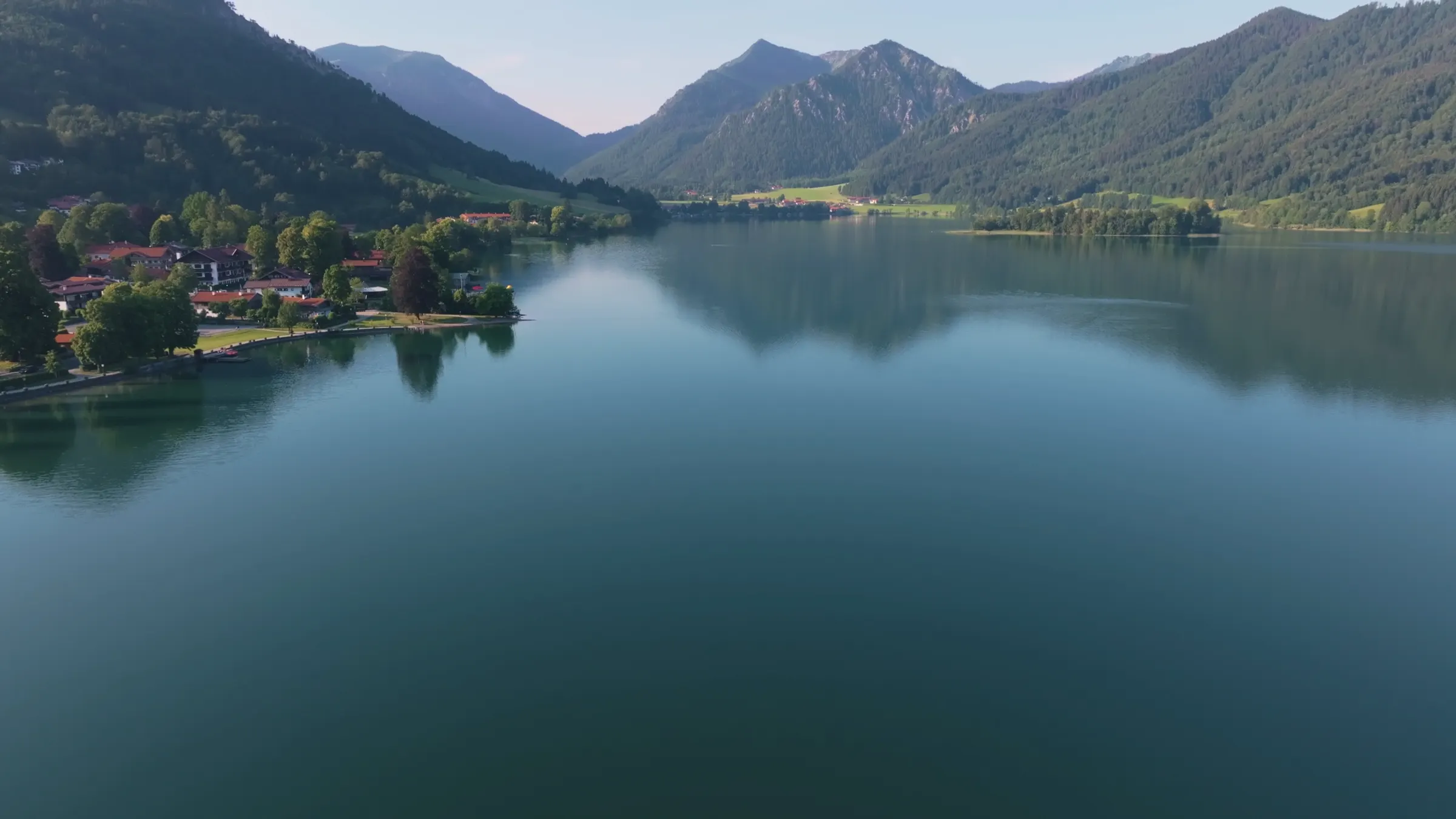
Tegernsee
or Schliersee?
Lake Tegernsee is the bigger, busier and more famous of the two: 8.9 km² of water, five villages on its shore and a royal past. The Schliersee is a quarter of the size, has one village, no private motorboats and a quieter evening. They lie 11 to 15 km apart by road, so the honest answer for most visitors is to stay at one and spend a day at the other.
The two lakes side by side
8.9km², Lake Tegernsee
2.22km², Schliersee
21km around the Tegernsee
7.4km around the Schliersee
Tegernsee vs Schliersee in one minute
Almost every difference between them follows from one number.
Both lakes sit in the district of Miesbach, about an hour south of Munich, at the point where the Bavarian foothills turn into proper mountains. Both belong to the Free State of Bavaria, both drain north into the same river, the Mangfall, and both are swimming lakes in summer. Visitors from abroad often treat them as interchangeable. They are not.
Lake Tegernsee covers 8.9 square kilometres; the Schliersee covers 2.22. The Tegernsee is 5.72 km long and up to 72.6 m deep, the Schliersee 2.5 km long and up to 40.5 m deep. A walk around the Tegernsee is 21 km. Around the Schliersee it is 7.4 km.
The surprise is altitude. The Schliersee lies at 777 metres, the Tegernsee at 726. The better-known lake is the lower one by 51 metres, which matters little for the view but says something about how fame and geography rarely line up.
Size explains the rest. Five municipalities touch the Tegernsee: Gmund, the town of Tegernsee, Rottach-Egern, Kreuth and Bad Wiessee. The Schliersee has one village, plus the hamlets of Fischhausen and Neuhaus at its southern end. One is a valley of small towns. The other is a village on a lake.
Every number compared
- Altitude
- Tegernsee 726 m, Schliersee 777 m
- Surface area
- 8.9 km² vs 2.22 km²
- Length and width
- 5.72 × 2.15 km vs 2.52 × 1.25 km
- Shoreline path
- 21.04 km vs 7.4 km
- Maximum depth
- 72.6 m vs 40.5 m
- Average depth
- 36.3 m vs 23.9 m
- Volume
- 323 vs 53 million m³
- Villages on the shore
- five vs one
- Private motorboats
- Schliersee: not allowed
- Owner
- both the Free State of Bavaria
- Train from Munich
- about 65 min vs about 50 min, both direct
What the difference feels like on the ground
Seven kilometres is a morning. Twenty-one is a day, or a bike ride.
You can walk around the Schliersee in about an hour and a half, or a relaxed morning with a coffee stop. The path is almost flat and stays close to the water nearly all the way. Because the lake is small, you always see the far shore and always know how far you have left. It is the walk most of our guests do on their first afternoon, straight from the station or the hotel.
Around Lake Tegernsee, 21 km is a full day on foot. Most people cycle it, drive between the villages or use the passenger boats that cross the lake. That is not a drawback, just a different kind of outing: you plan it rather than wander off.
The second difference is how busy it is. Five villages on the shore mean more shops, more restaurants, more boutiques in Rottach-Egern, two golf courses and more people. On a sunny Saturday in August the Tegernsee valley is lively, and the roads into it fill up. If you want browsing, cafés and a bit of bustle, that is a point for the Tegernsee. If you want to hear the water, it is not.
The third is the sound. Private motorboats are not permitted on the Schliersee. What you see on the water are rowing boats, small sailing boats, electric and pedal boats from the hire stand, stand-up paddleboards and one excursion boat that has made the same round since 1897 in one form or another. From the shore you hear oars and wind. For many of our guests that is the whole reason they come back.
One lake you take in with a single look. The other you have to divide into days.
Why Lake Tegernsee is so famous
A monastery and a king on one side, a butcher’s apprentice turned actor on the other.
Tegernsee’s fame is old and royal. The name first appears in the year 796, when the brothers Adalbert and Ottokar founded a monastery on the shore. Benedictine monks ran it until secularisation in 1803. In 1817 King Maximilian I Joseph of Bavaria and Queen Caroline bought the former monastery and turned it into Schloss Tegernsee, which the Wittelsbach family still owns today.
Where the court went, society followed. The Tegernsee became the summer retreat of the Bavarian royal house and of Munich’s well-off families, and the valley has carried that reputation ever since. The brewery in the old monastery buildings and its beer hall, the Bräustüberl, are part of the same story, and most visitors end up there at some point.
The Schliersee became known by another route. In 1891 the actor Xaver Terofal bought the inn that is now our hotel, and a year later he and the court actor Konrad Dreher founded the Schlierseer Bauerntheater, the first Bavarian peasant theatre: plays in dialect, performed by local craftsmen and farmers rather than trained actors. The theatre next to our house, designed by Emanuel von Seidl, held more than 450 people. In 1895 the company toured America and played the Metropolitan Opera in New York.
Put simply: one lake was made famous by a king, the other by a village theatre. Our house stands on the square named after Terofal, so you may assume we are biased.
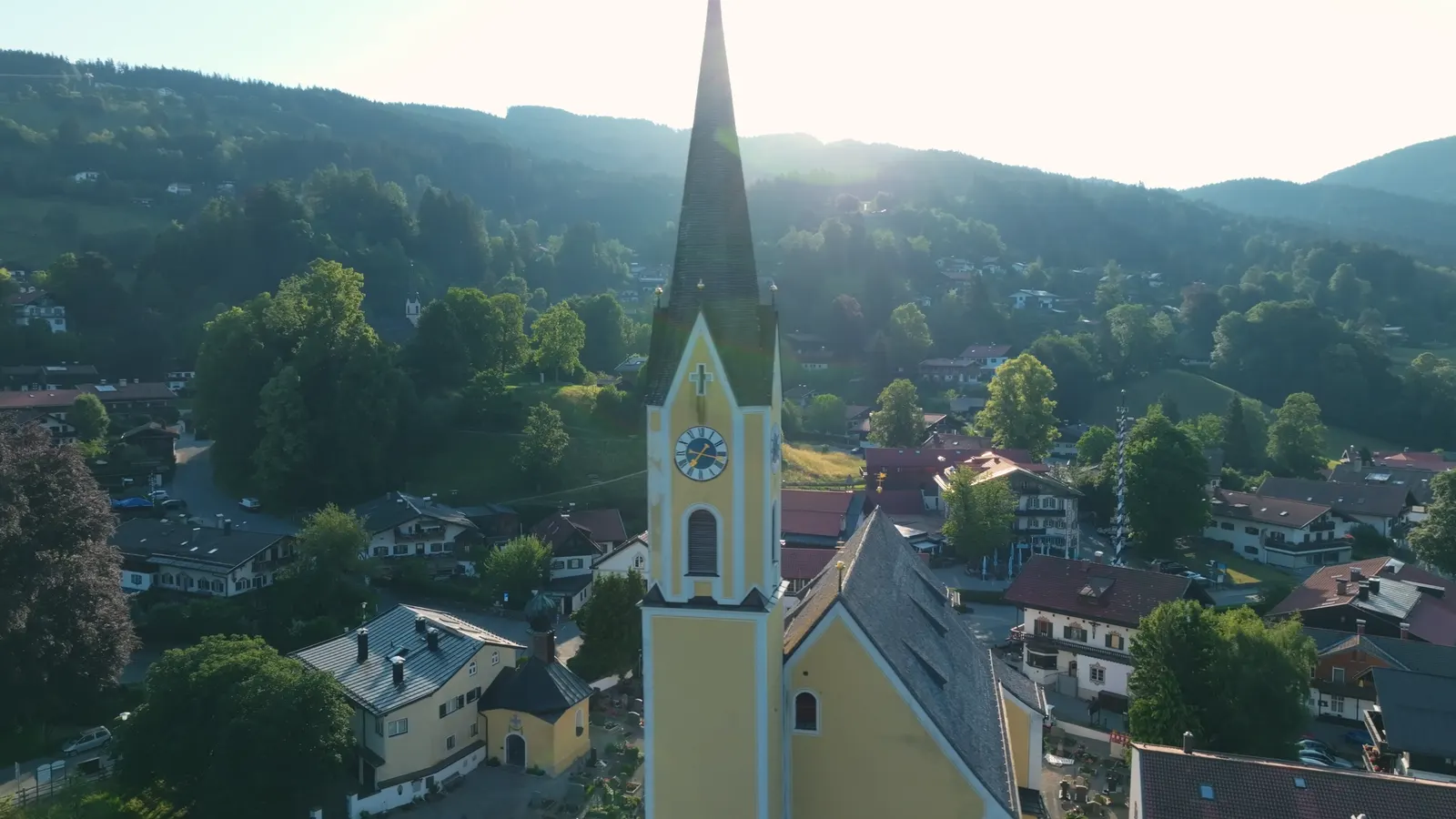
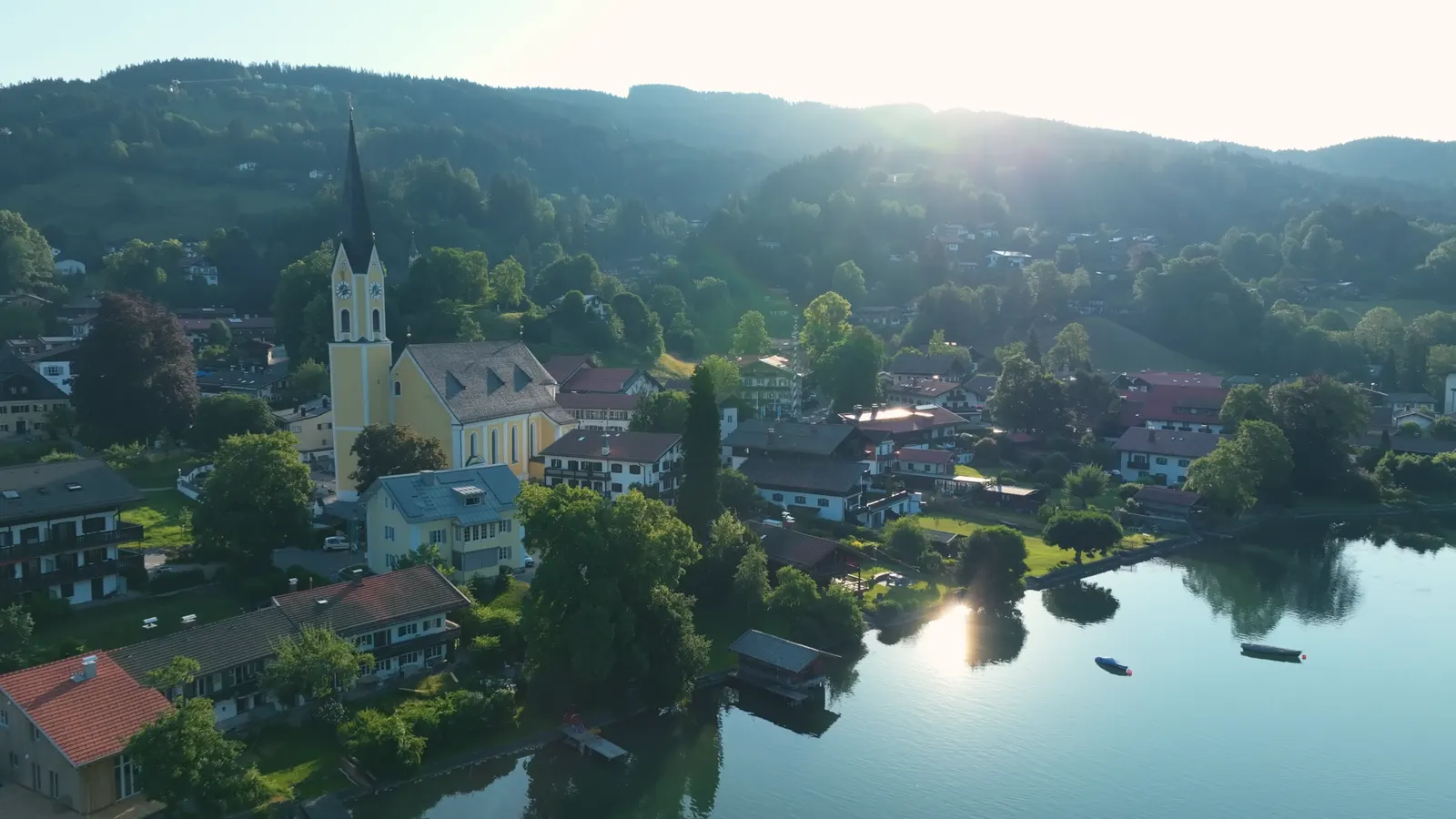
Which lake is cleaner?
Both nearly died. Both were rescued by engineering.
This is the part of the story the two lakes share, and almost nobody tells it. In the 1950s sewage from the surrounding villages pushed the Tegernsee’s ecology to the point of collapse. The answer, built in the 1960s, was the first complete ring sewer around a lake anywhere in the world. To this day, new building in the valley is tied to the capacity of the treatment plant.
The Schliersee’s trouble came twenty years later, and a ring sewer alone was not enough. The lake is sheltered from the wind and stays frozen long into spring, so it does not mix itself properly, and phosphate built up. An alga known as Burgundy blood alga turned the water red. In 1982 a compressed-air pipe was laid along the bottom of both basins. It turns over the whole lake in three to four days. Since then there have been no significant algal blooms and no fish kills.
Neither lake simply stayed beautiful. Both had to be saved, and both are now protected landscapes: 9,274 hectares around the Tegernsee, designated in 1956, and 1,754 hectares around the Schliersee.
Munich to Tegernsee and Munich to Schliersee
Both have a direct train. Both trains leave from the same platform, coupled together.
Neither lake needs a car. The Bayerische Regiobahn (BRB, until recently the Bayerische Oberlandbahn, which is why many locals still say “the BOB”) runs from Munich Central Station to both, without changing. The trick is that the trains for Bayrischzell (via Schliersee), Tegernsee and Lenggries usually leave Munich as one coupled train and are split on the way, first at Holzkirchen, then at Schaftlach. Usually the front section goes to Schliersee and Bayrischzell and the rear section to Tegernsee. The displays on the platform and in the carriages say which part goes where; check them before you sit down.
Journey times are about 50 minutes to Schliersee and about 65 minutes to Tegernsee. Trains to Schliersee run hourly, at busier times every half hour, from about 6 am until around midnight. Timetables change, so look up your train with the BRB or Deutsche Bahn before you go.
By car, Munich to Tegernsee is about 55 km on the A8 motorway and then south through Holzkirchen, around 50 minutes without traffic. Schliersee is a similar distance via the Weyarn exit. On fine summer weekends both lakes fill up and parking gets tight by late morning; that is when the train is quicker.
Getting there, in short
- Train Munich to Schliersee
- about 50 min, direct, BRB
- Train Munich to Tegernsee
- about 65 min, direct, BRB
- Which carriage
- trains split on the way; check the display
- Car Munich to Tegernsee
- about 55 km, around 50 min
- Car Munich to Schliersee
- A8, exit Weyarn, then about 20 min
- Schliersee to Tegernsee
- 11 to 15 km by road, 15 to 20 min
- On foot between the lakes
- over the Gindelalm and Neureuth, 3 to 4.5 hours
Can you do Tegernsee and Schliersee in one trip?
Easily. There is a mountain between them, and a footpath over it.
On the map the two lakes look like neighbours, and their municipal boundaries do touch. There is no road over the ridge between them, though. By car you go round the north end, through Hausham and Gmund: 11 to 15 km depending on which Tegernsee village you are heading for, 15 to 20 minutes. By train it is awkward, because the two lines only meet at Holzkirchen. There is a regional bus between the two (RVO line 9550 at the time of writing); check the current timetable before relying on it.
The best way between them is on foot. Ute and Markus Leitner, who run the Terofal, send guests over the hill as their favourite medium hike: from the Schliersee up to the Gindelalm, a working mountain pasture with a hut that serves food, on over the ridge to the Neureuth inn, and down to the town of Tegernsee and the Bräustüberl. The route, known locally as the Prinzenweg, is about 14 to 15 km with roughly 600 metres of climbing; the highest point is a little over 1,300 metres. The Leitners reckon on 3 to 4 hours of walking, and some guides give up to four and a half. You come back by bus or taxi.
Two practical notes. An “Alm” is a high summer pasture, and many of them run simple huts that serve soup, a Brotzeit (a plate of bread, cheese and cold cuts) and drinks, but opening days vary and some close on Mondays; check before you set off. And the Tegernsee side is busier than the Schliersee side, so start early on a weekend.
If you stay with us, there is one more link between the lakes: the beer garden in front of the house pours Tegernseer from the barrel. You can drink the Tegernsee without leaving the Schliersee.
Where to stay: Tegernsee or Schliersee?
Our answer, with the reasons, and the bias declared.
Ute and Markus Leitner will tell you, without being asked, that the Schliersee is the finest lake in Bavaria. That is their opinion, not a ranking, and they would say it about the lake outside their window. But the practical reasons for staying here and visiting the Tegernsee, rather than the other way round, hold up on their own.
From Schliersee the train runs to Munich in 50 minutes, the fastest of the two. The Spitzingsee, a mountain lake at 1,084 metres with walking in summer and skiing in winter, is a 15-minute bus ride south. The Markus Wasmeier open-air museum is a few kilometres away, the Wendelstein cable car about a quarter of an hour by car. And the Tegernsee is 15 to 20 minutes over the hill. In the evening, the village is quiet.
If you stay overnight in Schliersee, your host gives you the local guest card (Gästekarte). It works as a free ticket on buses and trains in MVV zones 6 to 9, which covers the regional buses and the BRB trains south of Miesbach and Moosrain, including the buses round the Tegernsee and up to the Spitzingsee. The details change from year to year; the tourist office lists them.
Doing it the other way round is fine too. You will probably pay more for your room and drive over for the quiet. It is just worth knowing before you book.
Addresses and sources
Every link goes to the operators themselves. Times and prices change, so please check them there.
Tegernseer Tal Tourismus
The official guide to the five villages around Lake Tegernsee, with boats, events and opening times.
Schliersee tourist office
The village’s own site: events, the guest card and what is happening this week.
Guest card (Gästekarte)
What the Schliersee guest card covers, including free buses and trains in MVV zones 6 to 9.
Bayerische Regiobahn (BRB)
Timetables and tickets for the trains from Munich Central Station to Schliersee and to Tegernsee.
Bavarian Palaces and Lakes Administration
Both lakes belong to the Free State of Bavaria. This is the authority that manages them.
Schlierseer Bauerntheater
Programme and tickets for the peasant theatre founded next door to us in 1892.
monte mare Seesauna Tegernsee
Lakeside sauna complex on the Tegernsee, one of the owners’ rainy-day suggestions.
Common questions.
Tegernsee or Schliersee: which is better?
It depends on the day you want. Lake Tegernsee is four times larger (8.9 km²), has five villages, more shops, restaurants and golf, and more people. The Schliersee (2.22 km²) has one village, a 7.4 km lakeside path you can walk in a morning, and no private motorboats. For a lively day out, choose the Tegernsee; for a quiet base, the Schliersee. They are 11 to 15 km apart by road, so many visitors do both.
Which lake is bigger, Tegernsee or Schliersee?
Lake Tegernsee, by a wide margin: 8.9 km² against 2.22 km², 5.72 km long against 2.52 km, and up to 72.6 m deep against 40.5 m. The path around it is 21 km, against 7.4 km around the Schliersee. The Schliersee lies higher, though, at 777 m against 726 m.
How do I get from Munich to Tegernsee?
By train, the BRB runs direct from Munich Central Station to Tegernsee in about 65 minutes, usually hourly. The train is coupled with the Schliersee and Lenggries services and split on the way, so check the display for the right section. By car it is about 55 km, around 50 minutes via the A8 and Holzkirchen.
How far is Schliersee from Tegernsee?
About 11 to 15 km by road, depending on which Tegernsee village you are heading for, or 15 to 20 minutes by car via Hausham and Gmund. There is no road over the ridge between them. On foot, the route over the Gindelalm and the Neureuth takes about 3 to 4.5 hours.
Can you swim in Lake Tegernsee and the Schliersee?
Yes, both are popular swimming lakes in summer, and both are clean today because they were rescued: the Tegernsee by the world’s first complete ring sewer around a lake in the 1960s, the Schliersee by a compressed-air pipe that has mixed the lake since 1982. Since then the Schliersee has had no significant algal blooms or fish kills.
Are motorboats allowed on the Schliersee?
Private motorboats are not. On the water you will find rowing boats, small sailing boats, electric and pedal boats for hire, stand-up paddleboards and one excursion boat. The lake belongs to the Free State of Bavaria and sits within a protected landscape of 1,754 hectares.
Should I stay at Tegernsee or Schliersee?
If you want to see both, Schliersee is the more practical base: the direct train to Munich takes about 50 minutes, the Spitzingsee ski and hiking area is 15 minutes by bus, and the Tegernsee is 15 to 20 minutes by car. Evenings are quieter than in a valley of five villages. The Tegernsee has more choice of restaurants and shops.
Why is Tegernsee more famous than Schliersee?
Because of the Bavarian royal family. In 1817 King Maximilian I Joseph and Queen Caroline bought the former Tegernsee monastery, now Schloss Tegernsee and still owned by the Wittelsbachs, and the court spent its summers there. Schliersee became known through the Schlierseer Bauerntheater, founded in 1892 by Xaver Terofal and Konrad Dreher, which toured as far as the Metropolitan Opera in New York in 1895.
Read on
- Things to do at Schliersee
Lake, boats, cable car, museum and mountains, nearest first, with the owners’ rainy-day list.
- The Schliersee guide
The lake, the mountains, the village’s history and how to get here from Munich.
- Rooms with a private sauna
Six rooms where the sauna is in the room itself, with a balcony or loggia and a view of the lake.
Start from here
Our house stands in the middle of the village, seven minutes on foot from the station and four from the water. Reception is happy to help with questions about the region, daily from 7:30 am to 8 pm on +49 8026 92921-0.